
Since the first trucks rolled into our Los Angeles depot in 2021, I have been asked the same question more times than I can count: what exactly does Zeem do?
For a long time my answer spanned too far. Trucks, power, charging, financing, grants, operations. It sounded elastic, like a company reaching for everything. But step back and it is actually a narrow focus: getting a fleet’s trucks out of the gate every morning on electricity, and taking ownership of everything that stands in the way.
This week we launched a new website and new language for what we do. I want to explain the reasoning, because it says as much about this market as it does about Zeem.
It is never one barrier
A diesel truck was a purchase. You bought it, and the fuel network was already there. Electrifying a fleet is a different undertaking. The trucks, the power, the land, the capital, the carbon and the data all have to arrive together, each with its own owner and its own clock. In this industry it is never one or two barriers. It is three or four, and they all collide at once. The hardest is power, because a utility can take years to deliver it.
Plenty of fleets start out believing they can put this together themselves, and some of them can, once. What they find out next is that doing it once is not the same as doing it at scale.
What five years taught us
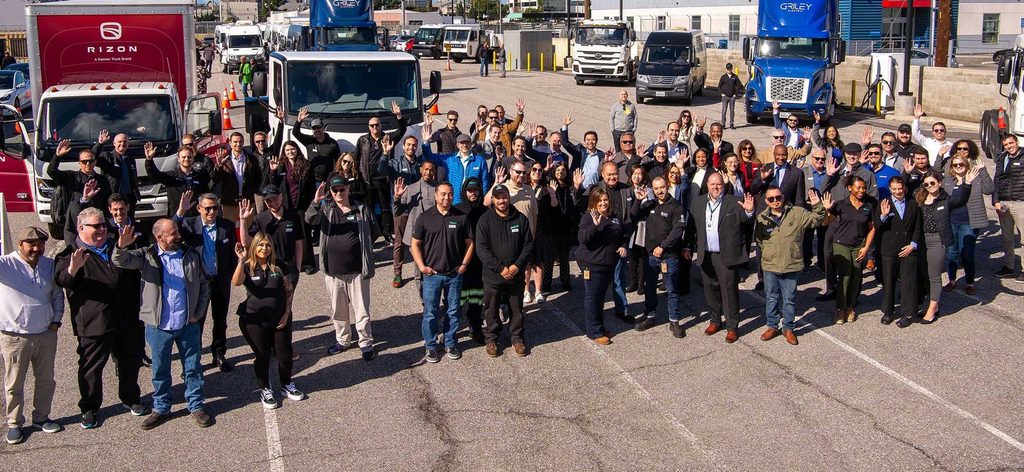
We learned this the only way anyone could: by doing it every morning. In 2021 we opened a shared fleet charging depot near LAX and ran it as a business rather than a pilot. It has run continuously since, across every vehicle class from 1 through 8, with more than 400,000 measured charging sessions and 97%+ measured readiness. On measured volume it is the busiest fleet EV charging depot in the United States, and it is profitable.
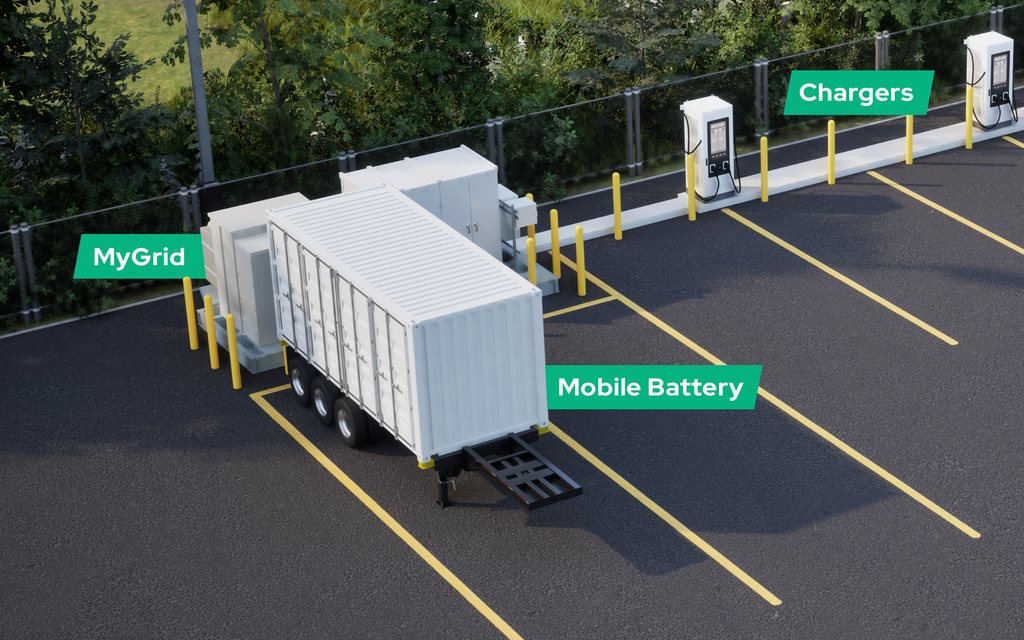
Every lesson that shaped what we offer today came from a problem we hit running it. Trenching and switchgear set the pace of a conventional build, so MyGrid, our in-yard power and charging system, is built and tested in a factory, delivered on a skid and installed in days. Utility queues keep their own schedule, so MyGrid runs on grid, generator or battery power, and a yard can start before the utility is ready. And charging hardware on its own only tells you the chargers worked. It says nothing about whether the trucks left. So every deployment we do carries the operation with it.
Stick-built or modular
When I look across this industry today, I still see people stick-building a house when they could be modular building. Every build is a snowflake: you do not know what you will run into until you start digging. Our first years were about operating, learning and proving. What comes next is simplifying, modernizing and scaling, so that the next yard starts where the last one finished rather than where it began.
Why we changed the words
For years, we were a better company than we described. I was cautious about saying too much, and the market met us one piece at a time: a charging company to some, a site developer to others. It is time to put it all on the table and explain: this is what we do.
Think about how phone, cable and internet used to be three bills from three companies, until they became one. Fleet electrification is on the same path. Electrification-as-a-Service is our name for the whole of it: the trucks, power and charging, managed operations, financing, and grants and incentives. One contract, one accountable operator, one forecasted monthly spend.
We also gave a name to the part that matters most at five in the morning. This industry sells uptime, which is a statistic about equipment. A fleet does not need working chargers. It needs trucks out of the gate. ZeemReady is our commitment to exactly that, from design and energization through daily operation.
Why new leadership
Proving the model took a founder and a depot. Delivering it for major fleets, in their own yards, on dates they sign for, is a different discipline. It comes down to two things: trucks that pay off across their whole life, and power that arrives on time and runs every morning. This week we named the two people who own them.
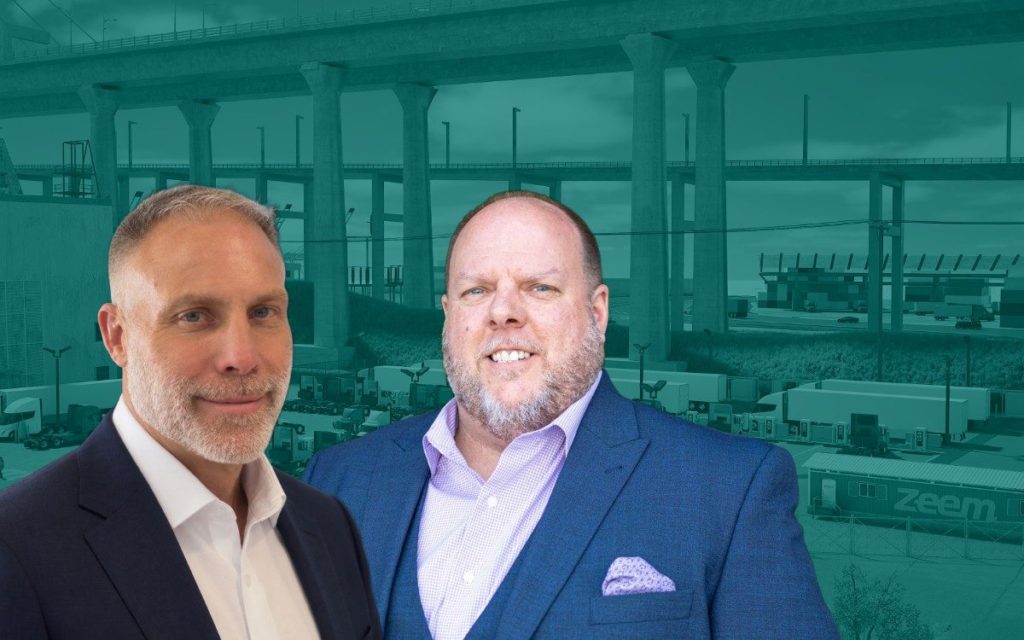
Al Barner, Senior Vice President of Fleet and Asset Management, brings nearly 30 years of making fleet economics hold across the life of the assets. Rick Eckert, Senior Vice President of Infrastructure and Operations, has run our depots since the first one opened, and now takes that operation into our customers’ yards.
Read the leadership announcement ›What Zeem is for
We pioneered shared fleet charging, and we are still here because the model works. The trucks are arriving now. The power, the yard and the operation are the hard part, and they are what we have spent five years learning to deliver. That is what Zeem is for.
Paul Gioupis
Founder and Chief Executive Officer, Zeem Solutions