 Olivier RoubiVice President, Business Development
 LinkedIn ›
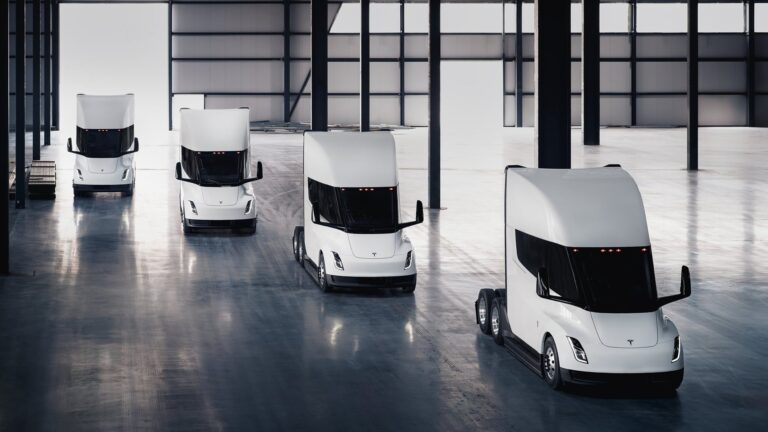
In September, California repealed its requirement that drayage fleets serving the ports switch to zero-emission trucks.1 Nobody is being forced. Yet the trucks are coming. Public voucher and grant data show about 1,500 Class 8 zero-emission trucks funded since November 2024, or still pending, for fleets in Los Angeles, Orange, San Bernardino and Riverside counties, and most are still on order.2
The question I hear most from carriers is simple: what will charging cost me per truck, every month? The honest answer starts with five other questions.
When going electric is a business decision, the charging deal has to earn its place. The truck is the easy part to picture. Where and how it charges decides whether it earns its keep. Here are the five questions I would ask any provider, what to listen for in the answer, and how we answer them at Zeem Long Beach.
1. Where is it, against your turns?
Every mile to a charger is a mile without a load. Ask how many miles each charge adds to your day, and whether a truck can charge between turns or only overnight. That question gets more valuable if the ports adopt their proposed payment for every terminal visit a zero-emission truck makes.3 Our grants team explains how it would work.
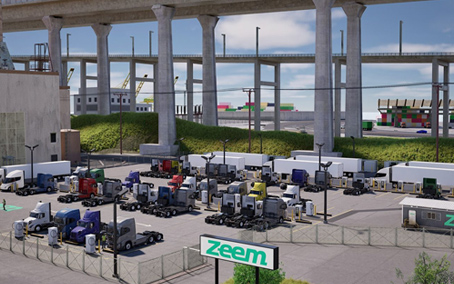
Our answer: Zeem Long Beach sits on Terminal Island, inside the Port of Long Beach, next to Piers T and S and the I-710, serving the two largest container ports in the country.
2. Can a Class 8 get in and out with a chassis?
Backing a chassis into a stall costs time at every session. Ask whether the lanes are pull-through, whether you can charge bobtail, and whether the truck can stay parked overnight.
Our answer: our charging is pull-through and bobtail. Bring the chassis, or come in bobtail. Parking is by the month.
3. Is the power on?
Utility power is the longest wait on any charging project, and the region knows it: the ports’ 2025 agreement with the South Coast Air Quality Management District sets out plans for zero-emission infrastructure, with the first draft due in 2027.4 Ask whether utility power is on today or only promised, and whether there is more than one feed. Then ask which of your trucks need megawatt charging (MCS) and which need DC fast charging (CCS).
Our answer: we are building Zeem Long Beach in two phases. Phase one is done: utility power reaches the site from two separate switchyards. Phase two, megawatt charging for Class 8, is being built now, for opening in early 2027. At full build: 15 MW and 108 charging ports, 24 megawatt (MCS) and 84 DC fast (CCS). The Los Angeles Business Journal covered the power on 23 November: Zeem Secures Power for New Depot.
4. How do you pay?
A rate per kWh is not a price. Ask for the total cost per truck per month, what happens if a truck charges at peak hours, and whether the price is in writing before you sign.
Our answer: two ways to charge. Overnight charging is one flat monthly fee per truck, sized to your annual miles, with an inspection before and after every session. Opportunity charging is quick in-and-out charging by our staff, billed per kWh, built for fleets whose volumes swing. Parking is by the month. Trucks parked overnight charge off-peak; peak hours are late afternoon and evening.
5. Who answers at 5 AM?
Charging works when someone runs it. Ask who is on site overnight, how readiness is measured, and whether it is written into the contract.
Our answer: the depot will be fenced, camera-monitored and staffed 24/7 from opening day by the team that runs our LAX depot, where fleets have logged more than 450,000 charging sessions, with 97%+ readiness written into our service agreements.
And one more: how will you pay for the truck?
Much of the funding is first come, first served, and some of it closes soon. Alma Pacheco, our grants and external affairs manager, set out what is open and when it closes. Have a yard of your own? MyGrid brings charging behind your fence.
Where to start
Olivier Roubi
Vice President, Business Development · Zeem Long Beach
The most common mistake I see is comparing the price per kWh and stopping there. Where the charger sits, whether the power is on, and who answers at 5 AM decide what a truck actually earns. Send me your trucks, your miles per day and when they can charge, and I come back with a written charging plan and a quote.
LinkedIn ›Sources: 1. Commercial Carrier Journal, “California finalizes repeal of zero-emission truck rules”, 14 September 2026. 2. Zeem analysis of CARB HVIP voucher data (31 October 2026) and California VW Mitigation Trust awards, November 2026; counts are by the buyer’s address, not where trucks park. 3. Ports of Los Angeles and Long Beach, proposed Zero-Emission Truck Rewards Incentive Program (ZE-TRIP), Clean Air Action Plan. 4. gCaptain, “Ports of Los Angeles and Long Beach Commit to Binding Zero-Emissions Agreement with Regulators”, 11 November 2025.
Zeem Long Beach, 121 Pier T Lane, Long Beach, CA 90802. Renderings shown; the depot opens in early 2027.